


Screen time
How to set a daily screen time limit on your child's phone (Android and iPhone)
Hami Team7 min read
 Hami Team8 min read
Setting up a child's first phone goes in this order: create an account for the child first (a child Apple Account in Family Sharing on iPhone, a child Google account on Android), set up the phone together, then put three basic rules in place: a bedtime, a daily screen time limit and an adult website filter. Add location and safe zones after talking it through with your child, turn on removal protection, and invite the second parent. The whole thing fits in an afternoon.
This list starts before the phone comes out of the box, because the hardest decisions are there.
Readiness is the most common question, and age alone does not answer it. Signs that a child is ready for a first phone:
If most of these are not there yet, wait a few months and try a basic phone or a watch first. A first phone goes better with a written agreement; see a family phone agreement your child will actually keep.
Does it need to be a smartphone? For letting you know they got off the bus, a basic phone or a watch is enough for most 8- to 10-year-olds. A smartphone brings the whole internet into a child's life. Waiting a year or two despite the "everyone has one" pressure rarely leads to regret; handing one over early sometimes does.
Who needs to agree? Most first-phone disputes break out between the parents: one relaxed, the other strict. Agree on the same three rules before buying. In Hami both parents manage the same family, so the rules live in one place.
Which platform? The child's phone can be an iPhone or an Android, and so can yours. But parental control works differently on the two: Android gives you per-app detail, category locks, new-app approval and site history; Apple does not allow some of these on iPhone, and the daily limit there counts total screen time. A second-hand Android is often the more manageable first phone. If you are buying an iPhone, read What parental controls can do on an iPhone first.
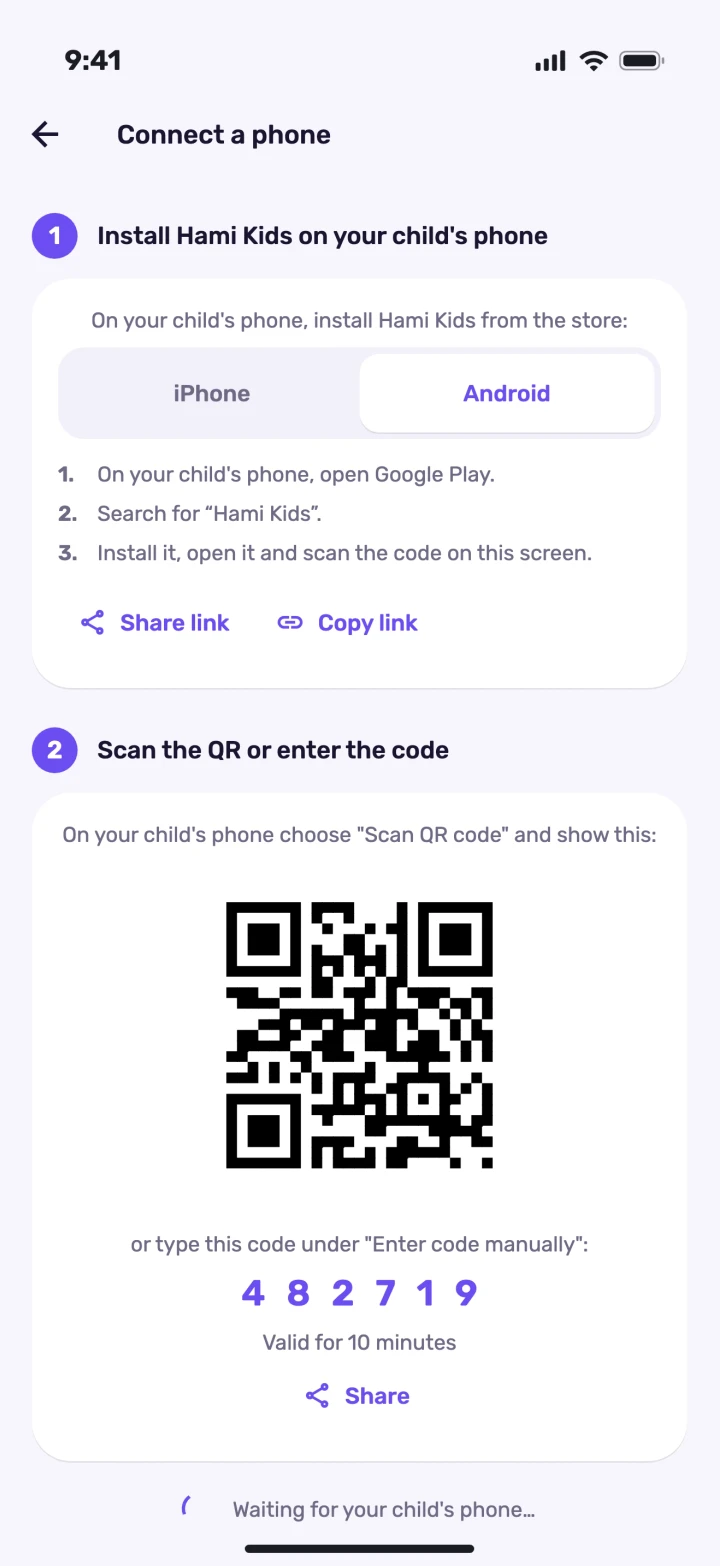
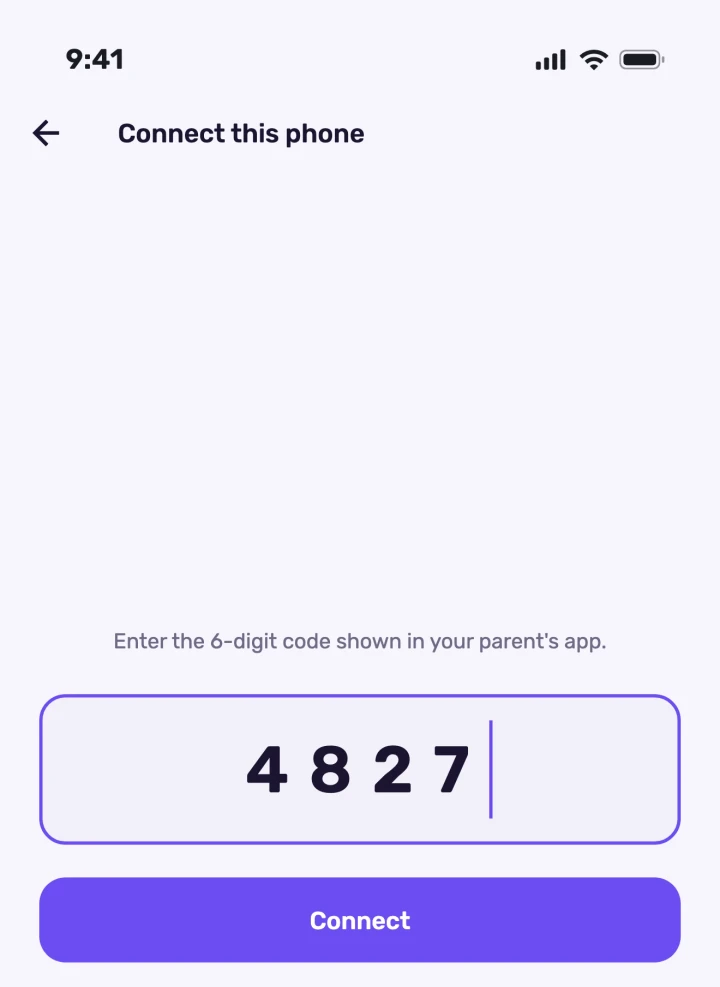
Do not turn everything on at once; the child is crushed under the rules and you deal with every notification. For the first week:
On Android, also turn on new-app approval: when the child installs an app, it waits until you approve. The number of apps installed in the first month of a first phone is very high; this rule is the easiest way to see what is coming in.
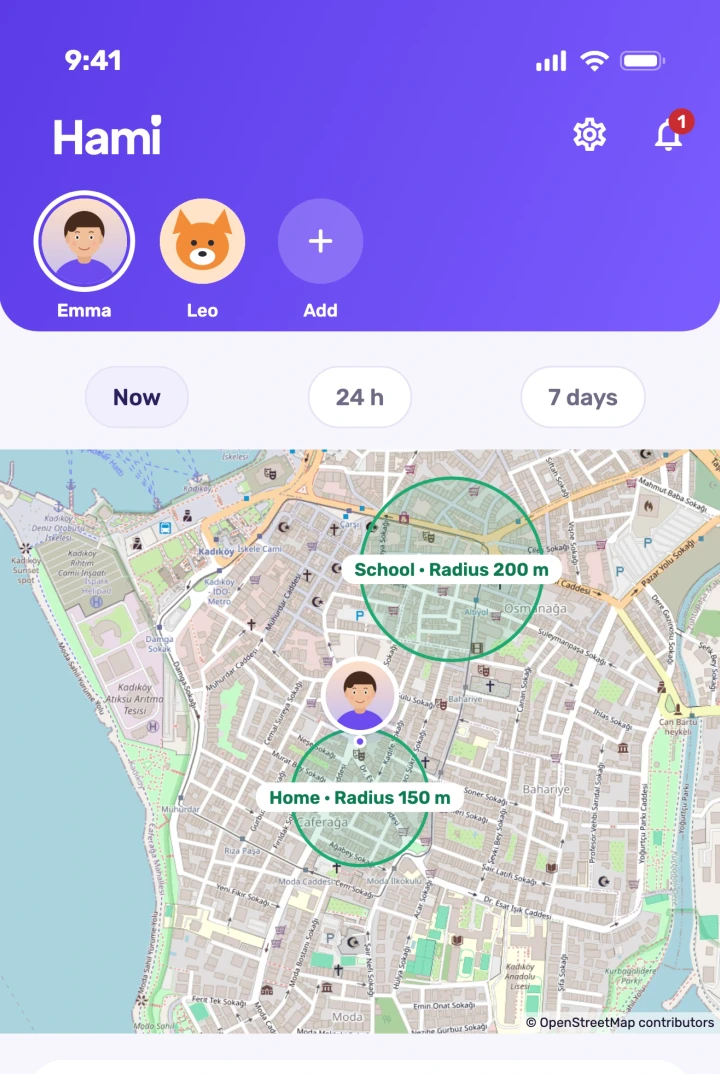
Turn location on after talking with your child, not on setup day. "I can see where you are; it's not to control you, it's to reach you" needs to be said before location goes on, not after. The child sees in Hami Kids that location is on.
Then add the school as the first safe zone with "notify on leaving" ticked, and home with "notify on arrival". Show the child the SOS button; it helps them see location as a tool in their hands too. Location and safe zones is the long version of this section.
Removal protection. On Android, Hami Kids is protected against removal; uninstalling needs the parent PIN and you are notified if the child tries to turn protection off. On iPhone it depends on the child Apple Account; without Family Sharing, Hami suggests a Screen Time passcode step. Guide.
The second parent. In Hami, go to Settings › Family, generate an invite code and send it to your partner; they sign up for Hami and enter the code. Both phones see the same family, and requests reach both of you. Guide.
The weekly report arrives every Monday: total screen time, the category that took the most time, the days the limit was reached, how many times more time was requested, newly installed apps. At the end of the first month, sit down with your child and these reports. If the limit is reached every day it may be too low; if never, perhaps unnecessary. If one app takes most of the time, give it a limit of its own or tie it to a learning app with conditional time.
Rules loosening as the child grows is normal; staying fixed is not. The written agreement is the place to record when you will review.
Read this list once with your partner before the phone comes out of the box and agree on the three rules. The rest is a five-minute setup and a few weeks of settling in. To see what Hami does on each platform, look at the table on the home page.
There is no single right age. In most families the first phone arrives between 10 and 13, usually when the child starts travelling to school alone. The question should be 'what for' rather than 'how old': a basic phone may be enough just to stay in touch.
Three are enough for the first week: a bedtime, a daily screen time limit and an adult website filter. On Android, new-app approval is worth turning on as well. Add location and safe zones after talking it through with your child.
On an iPhone, a child Apple Account inside Family Sharing; on Android, a Google account created for the child's age. Child accounts enforce age limits and let parental control apps work properly.
About five minutes: install Hami on your phone and Hami Kids on the child's, enter the 6-digit code and choose the rules. Doing the second step together with your child is best.
Screen time
Hami Team7 min read

App limits
Hami Team6 min read

App limits
Hami Team6 min read
Set it up in about five minutes. Your child can always see which rules are on.