
Screen time
How to set a daily screen time limit on your child's phone (Android and iPhone)
Hami Team7 min read
 Hami Team6 min read
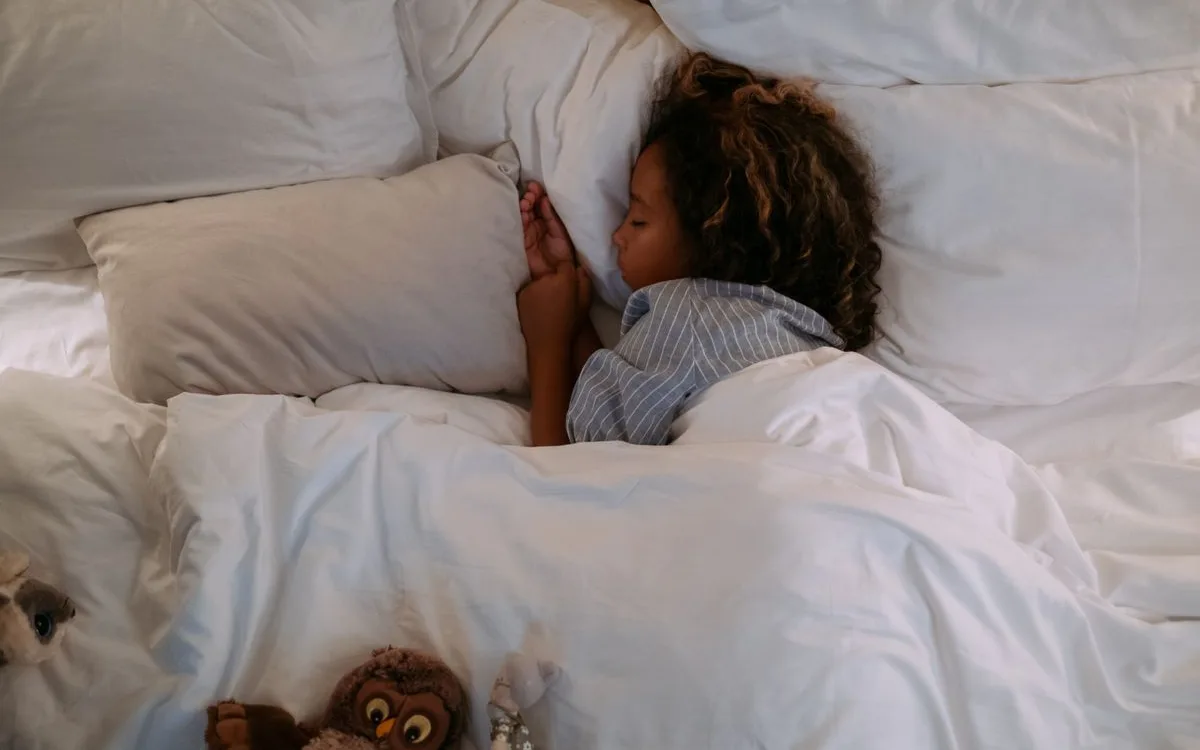
Bedtime and school time are two rules that pause your child's phone between set hours on their own. In Hami you set the bedtime once: the phone locks every night at the time you chose and opens again in the morning. School time does the same for lesson hours on school days. You decide which apps stay available during those hours. Both rules work on Android and on iPhone.
The biggest benefit of a night rule is that it is not renegotiated every evening. If the phone goes quiet at 9 pm, the "five more minutes" bargaining happens with the rule, not with you. The child reads why on the lock screen.
Between the start and end times you choose, apps lock. The lock screen shows "bedtime" as the reason. At the end time in the morning the phone returns to normal by itself; nothing for you to do.
The phone does not switch off. If needed, your child can open Hami Kids and send an SOS or a request for more time. Apps you marked as available during bedtime keep working.
Bedtime is independent of the daily limit. Even if the day's time has not been used up, the phone goes quiet when the hour comes. Running both is the most common arrangement: a total for the day, a firm hour for the night.
Hami suggests a bedtime based on the child's age when you add them; it is a starting point you change freely. For how much sleep children need, with sources, and how to choose an hour, read phones and sleep.
The rule reaches the child's phone the moment you save. If you chose bedtime during setup it is already on; you change it here.
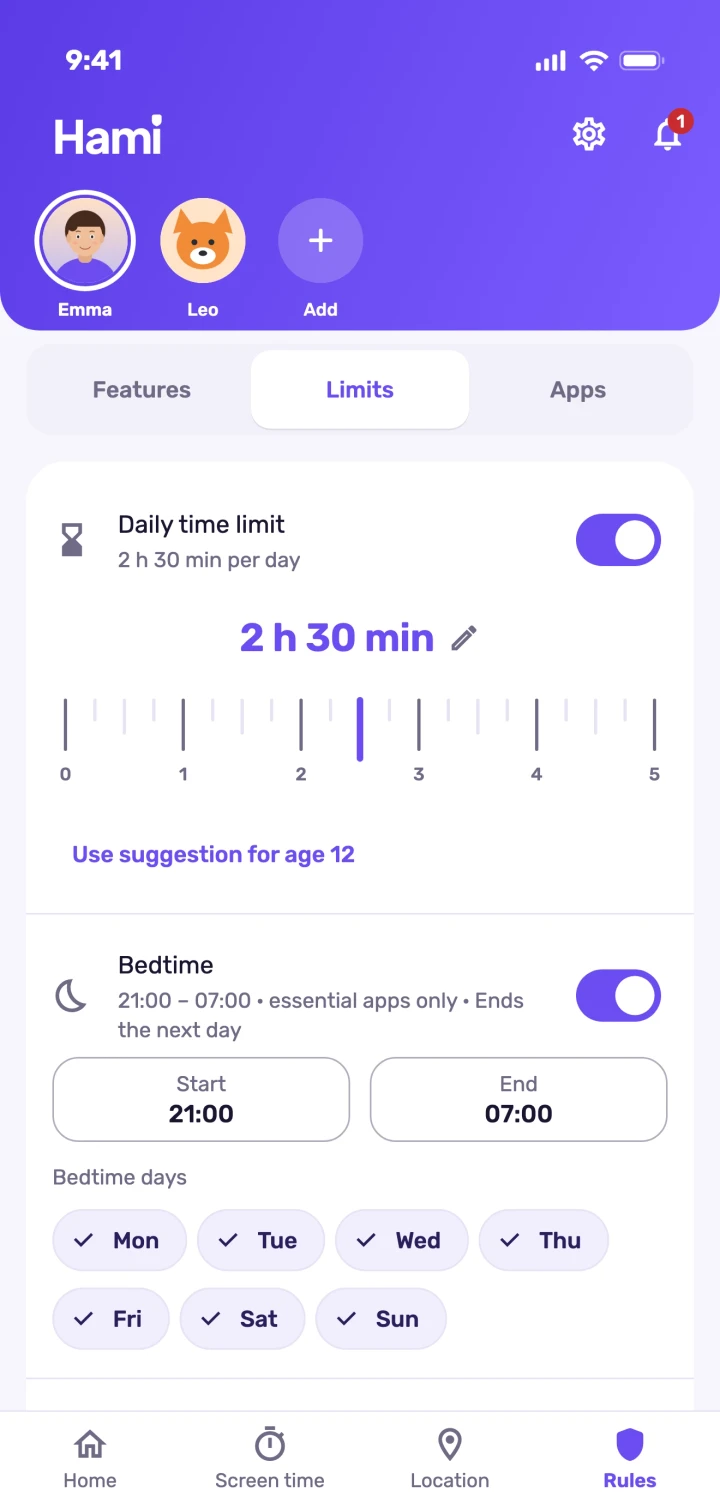
School time carries the same logic into school days. A start and end time (8.30 to 3.30, say), the school days (usually Monday to Friday) and the apps allowed during those hours. When lessons end the phone opens up, and your child can reach you on the bus or the walk home.
Where the school has a phone rule, this gives it a counterpart on the phone. Where the school does not collect phones, it is the simplest way to switch off games and messaging during lessons. Remember to turn it off in holiday weeks; Hami does not know the school calendar for you.
For things that do not happen at the same time every day, use Pause instead of a fixed rule. When homework has to get done, you tap "Pause 30 min" from your own phone; when it ends, the phone opens again. Or use Instant lock when everyone sits down to dinner and unlock when you get up. Fixed hours are for routine; pause is for the flow of the day.
Bedtime and school time work on both platforms; among the time rules, this is the area where the iPhone causes the least trouble. Two details worth knowing:
For the other differences, see What parental controls can do on an iPhone.
The rule closes apps but does not stop the phone living under the pillow. A shared charging spot outside the bedrooms works harder than any setting; the reasons are in phones and sleep.
Bedtime is the rule a child feels most, so explain it before you turn it on. In Hami Kids your child sees which rules are on and reads why the phone went quiet at night. There is no "the phone is broken" or "mum switched it off secretly". Choosing the hour together, especially from age eleven or so, improves compliance noticeably.
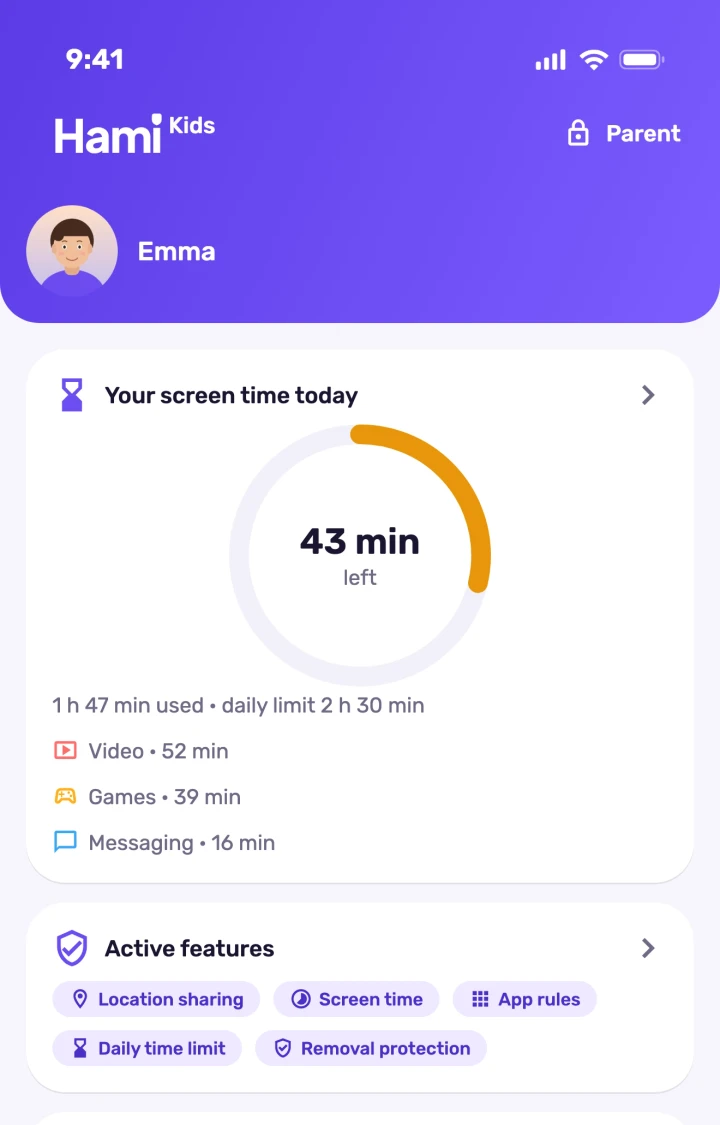
Pick an hour for tonight, turn on bedtime under Rules in Hami, and tell your child. Talk about how the mornings are going a week later. If you also want to shape the daytime total, the daily screen time limit article is the sequel. If you have not set up yet, Set up Hami in 5 minutes.
It locks apps; the phone stays on. You choose which apps remain usable during bedtime and school time, the rest lock and the lock screen says why.
You choose the days the bedtime applies to. You can leave weekend nights out of the rule and keep it on during the week.
It pauses the phone between the hours you choose on school days. The child can only use the apps you allowed; when lessons end, the phone opens up by itself.
Sleep needs vary with age: the American Academy of Sleep Medicine consensus gives 9 to 12 hours for ages 6 to 12 and 8 to 10 for teenagers, and stopping screens about an hour before bed is a common recommendation. Hami suggests a starting time based on the child's age; you change it as you like.
Screen time
Hami Team7 min read
Bedtime & school
Hami Team7 min read

iPhone
Hami Team5 min read
Set it up in about five minutes. Your child can always see which rules are on.