


First phone
Your child's first phone: a setup checklist for parents
Hami Team8 min read
 Hami Team8 min read
A family phone agreement is a short written text that you and your child agree on together: when the phone is used, where it sleeps, what happens when a rule is broken. It works because it moves the argument from the moment ("turn it off now") to a calm conversation held earlier, with reasons both sides remember. This guide shows how to write one, which seven clauses are worth having, and gives short sample wording for three age bands that you can copy and change.
Spoken rules drift. By Thursday nobody remembers whether the limit was "an hour on school days" or "an hour if homework is done", and each side remembers the version that suits them. A written text ends that: the rule is the same on Monday and on Friday, and the parent is no longer the person inventing it on the spot.
A second effect matters more. A child who helped write a rule experiences it as something they chose. That does not make every evening easy, but the conversation changes from "you are mean" to "we agreed on this, can we change it?", and the second question has a calm answer: yes, at the next review.
Let your child go first. Give them a sheet of paper and ask: "What would a fair set of phone rules look like?" Children tend to propose something stricter than parents expect, and the ones they propose themselves are the ones they keep. Then add your own concerns and negotiate the gaps.
A few ground rules for the session:
You do not need a legal document. Seven clauses cover almost every family:
An agreement that only binds the child will be read as unfair, and children are good at spotting that. Add two or three clauses that apply to the adults: phones away at dinner, no phone in the first ten minutes after you collect your child from school, no photos of the child posted without asking. If you promise something in return, keep it. Parents who check their phone at the table while enforcing a phone-free table lose the conversation before it begins.
These are starting points, deliberately short. Change every line that does not fit your family.
Put the review dates in the agreement itself. Good moments are the start of a school year, a new device, a birthday, and any time something goes wrong twice. A review is not a punishment for the child or a reward for good behaviour; it is the point at which rules grow with the child. Teenagers who know the next review date argue less in between, because they know where to take their case.
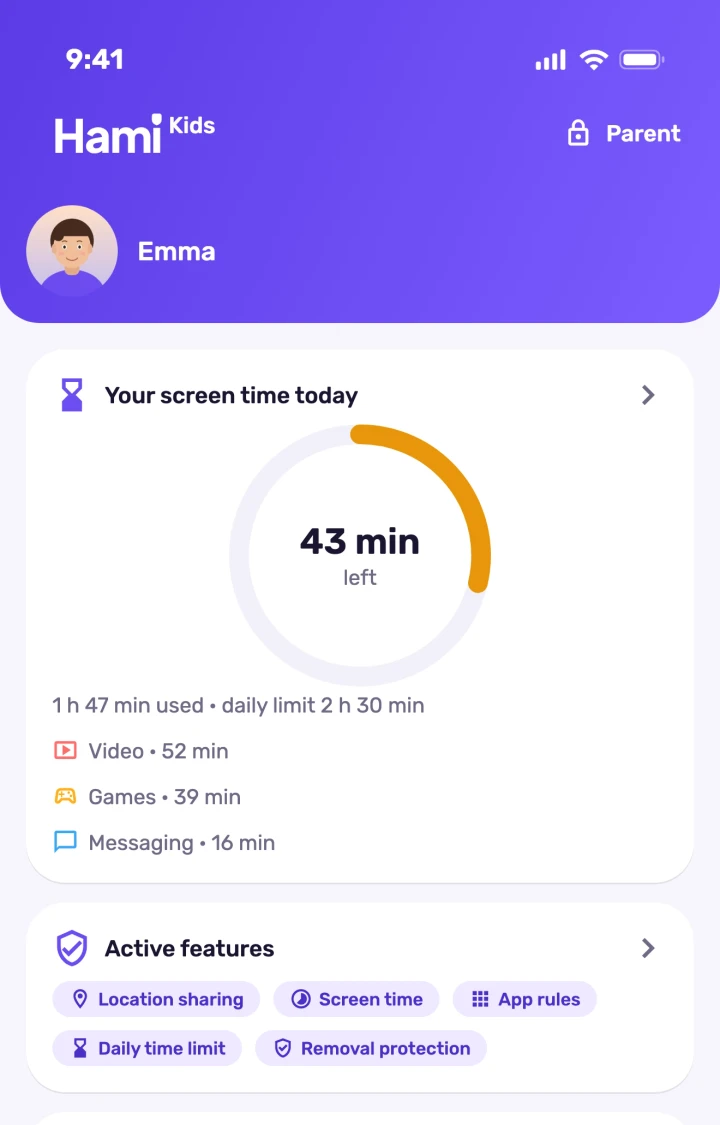
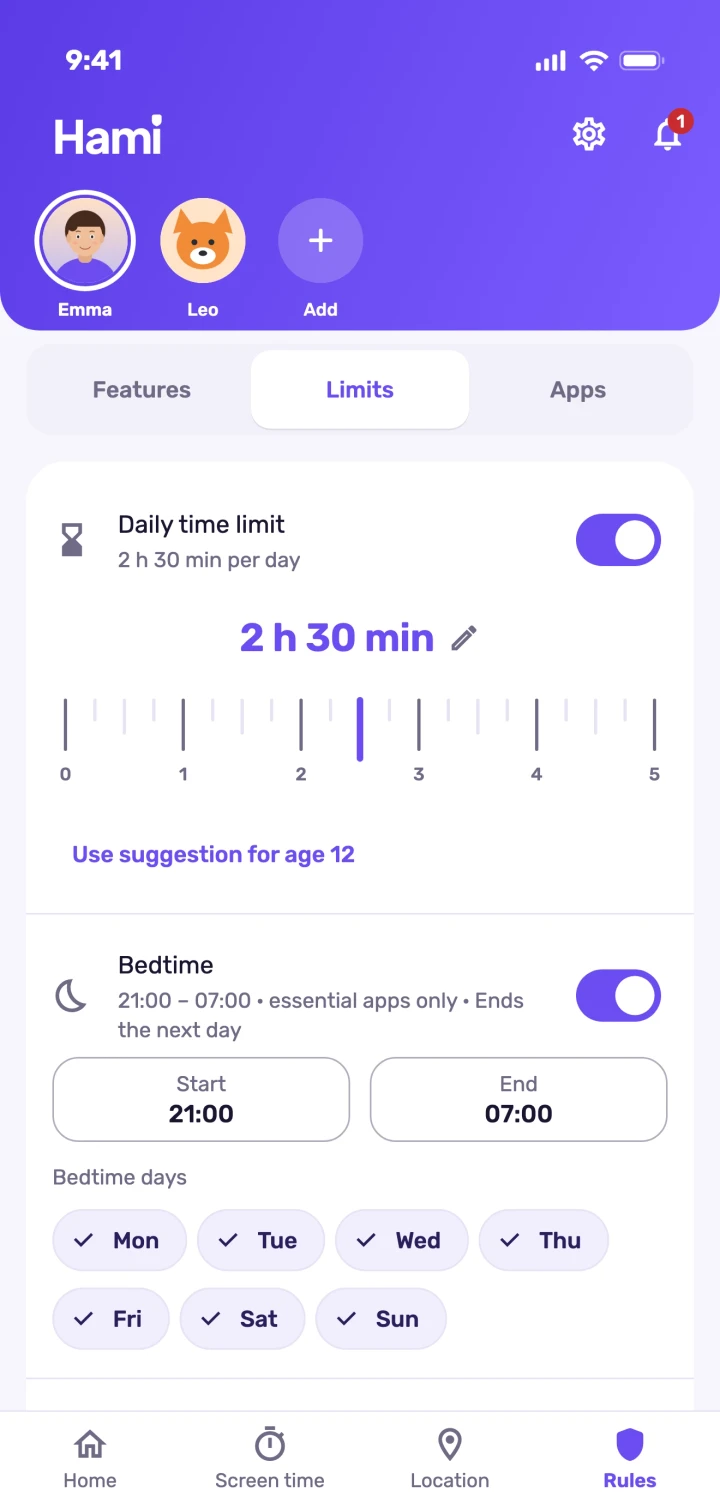
If you use Hami, the agreement and the app should say the same thing. The rules you wrote down are the ones your child sees switched on in Hami Kids, on the home screen, with the time left and the reason when a rule applies. Hami Kids has a visible icon, on Android a persistent notification, and a screen called "What my parent can see" that lists exactly what is shared. It never reads messages, never uses the microphone and uses the camera only for the optional pairing QR code.
Because the child sees the same rules in the app that they signed on paper, a locked app is not a surprise or a mystery. They read why, and if they disagree, they ask in the app or at the next review. See what your child sees in Hami Kids for a tour of that screen, and how to tell your child about parental controls for the conversation itself.
Tonight, hand your child a sheet of paper and ask what a fair set of rules would look like. Write seven short lines together, sign it, put it on the fridge and photograph it. Set a review date, and then set the rules in the app to match. If the phone is brand new, the first phone checklist covers the setup around the agreement.
No. A first phone is the easiest moment to start, but you can introduce an agreement at any age. Present it as a fresh start for the whole family, not as a verdict on past behaviour.
Yes, and so should you. A signature, even a joke one, turns the text from your rules into our rules. Keep one copy on the fridge and one on each phone as a photo.
Start with one clause they care about, such as when they may game, and write only that. A short agreement that both sides accept is worth more than a long one you wrote alone. Add clauses at the next review.
The agreement is the conversation and the reasons; the settings are the tools that make the rules easy to keep. They work best when they match: whatever is written down is what your child sees switched on in the app.
First phone
Hami Team8 min read

Screen time
Hami Team8 min read

Transparency & trust
Hami Team7 min read
Set it up in about five minutes. Your child can always see which rules are on.