


Family rules
A family phone agreement your child will actually keep
Hami Team8 min read
 Hami Team7 min read
The right time for a first social media account is when your child is old enough for the platform's own rules, ready for what happens there and willing to start small and talk about it. Age is only the floor. This guide covers what the platforms say about age, the signs of readiness that matter more, how to start with one app and a private account, the settings to change on day one and the limits of any tool, Hami included.
Large social platforms set a minimum age in their terms of service. To our knowledge, as of November 2026, the big ones such as Instagram, TikTok and Snapchat set 13 as the minimum in most countries, and some countries or regions set a higher age or require a parent's consent for younger users. The rules and the age checks change often and differ by country, so look at each app's own help centre for your country before you decide (Instagram, TikTok, Snapchat). Messaging apps and games with chat often have their own rules too.
An account opened with a false birth date is common, and it has a cost: the app then treats a child as an adult and switches off the protections designed for younger users. If your child is under the minimum, wait, or choose an app designed for their age, rather than lying about the date.
An age of 13 does not tell you whether a child is ready. Look for these signs:
If two or three are missing, wait a few months and revisit. A "not yet, here is what I need to see" is easier to hear than a flat no.
Sit down together and go through the app's settings, looking for these (the names differ between apps and change over time):
Do this together rather than for them, so your child understands why each setting exists.
Three subjects deserve their own conversation:
A written family phone agreement is a good place to capture these. For how to bring it up, see how to tell your child about parental controls.
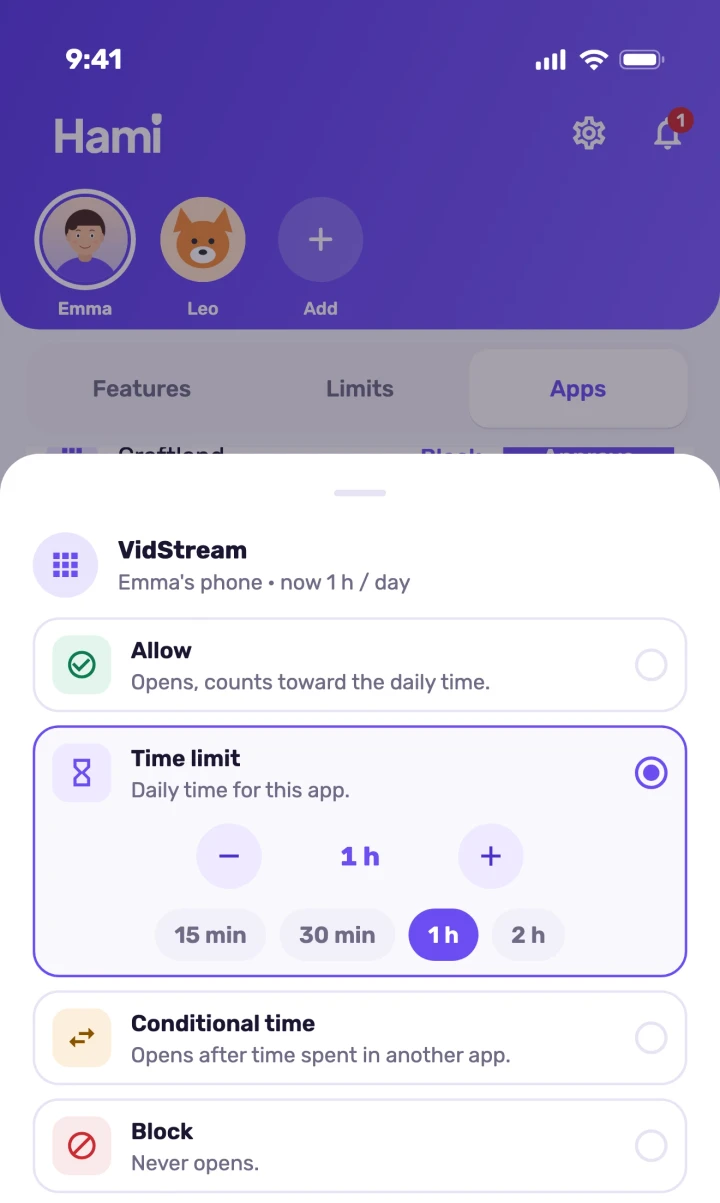
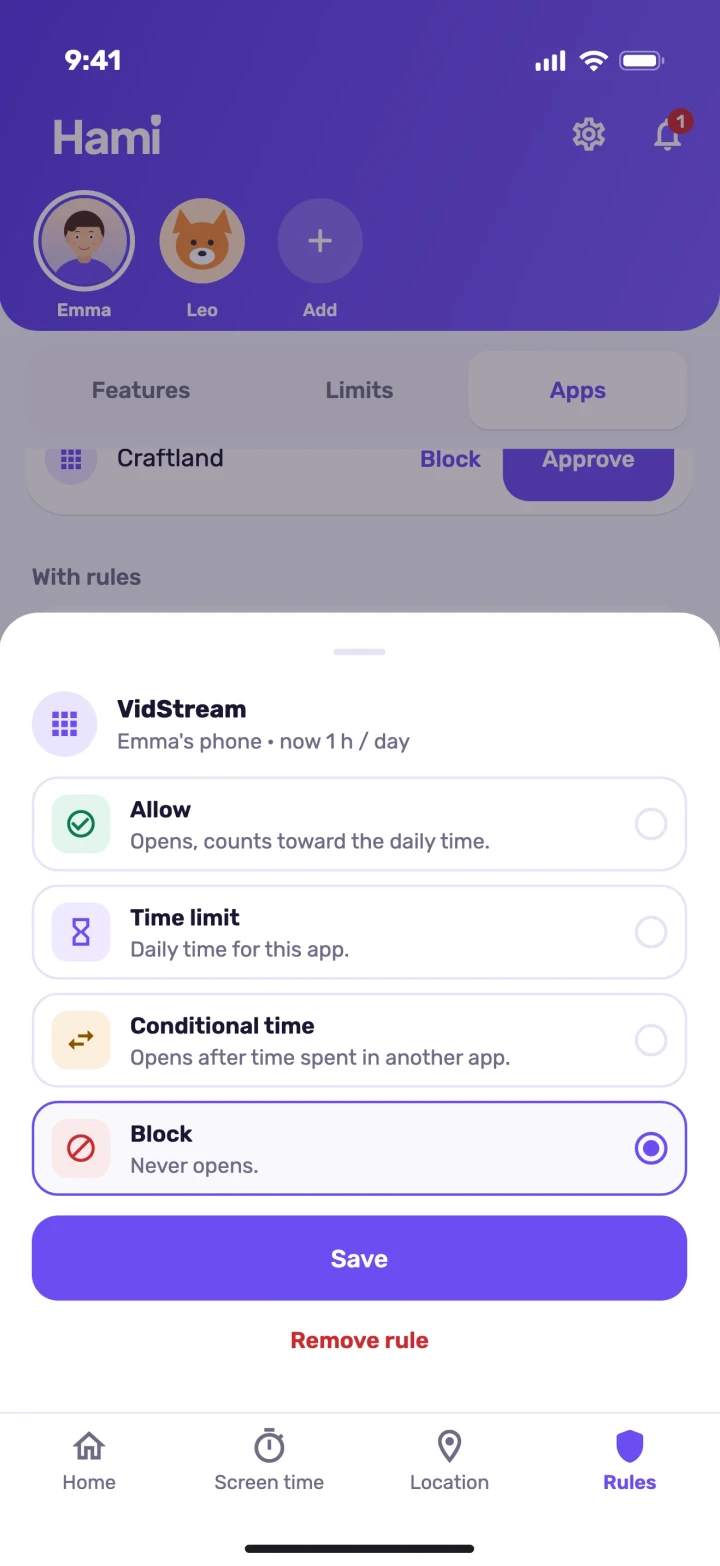
Hami does not read messages, does not use the microphone and cannot see inside other apps. That is a deliberate promise to the child, and it limits what Hami can do for social media. What it can do:
It cannot tell you who your child is talking to or what they are being sent. For that the protection is your child: someone who knows the rules, knows you will not punish honesty and knows how to block and report. Hami being transparent matters here: the child sees what you can see, so the tool does not become one more thing to hide.
Decide together whether now is right, using the readiness signs. If it is, pick one app, create a private account and go through the settings side by side. Agree a trial month and put the review date in the calendar.
Most large platforms set a minimum age of 13 in their own terms, and some countries set a higher age or require parental consent. Age is the floor, not the signal: readiness (talking about strangers, handling unkind messages, stopping when asked) matters as much.
No. Hami never reads message content and cannot see inside other apps. What it can do is limit the time in the app, set the hours it is available, block it, and on Android ask you to approve a new app.
For a first account, yes: a private profile, known contacts only, and messages from strangers off wherever the app allows it. Check the settings together on day one.
Many families agree that a parent can ask to look at the account together, and that the child will not delete content or create a second account to avoid it. Agree it in writing, and then use it rarely and openly.
Family rules
Hami Team8 min read

App limits
Hami Team6 min read

Transparency & trust
Hami Team7 min read
Set it up in about five minutes. Your child can always see which rules are on.