

Bedtime & school
Bedtime and school time on a child's phone: how to set them up
Hami Team6 min read
 Hami Team7 min read
Children who use phones late sleep less and worse, mostly because the phone takes the hours before sleep, not because of some special property of light. The practical answer is dull and works: agree a time when the screen stops, give the phone a place to sleep that is not the bedroom, and build a short wind-down routine. This guide covers how much sleep children need, what phones really do to it and how to set rules that survive weekends and teenagers. It is general information and not medical advice; if your child struggles to sleep, talk to your paediatrician.
Official ranges differ slightly by body and by age. Two sources worth quoting by name:
Children differ, and a fixed number does not fit every child. A useful test is how your child is on a school morning: if they wake without fuss and are alert by mid-morning, the amount is probably right.
The honest answer has three parts.
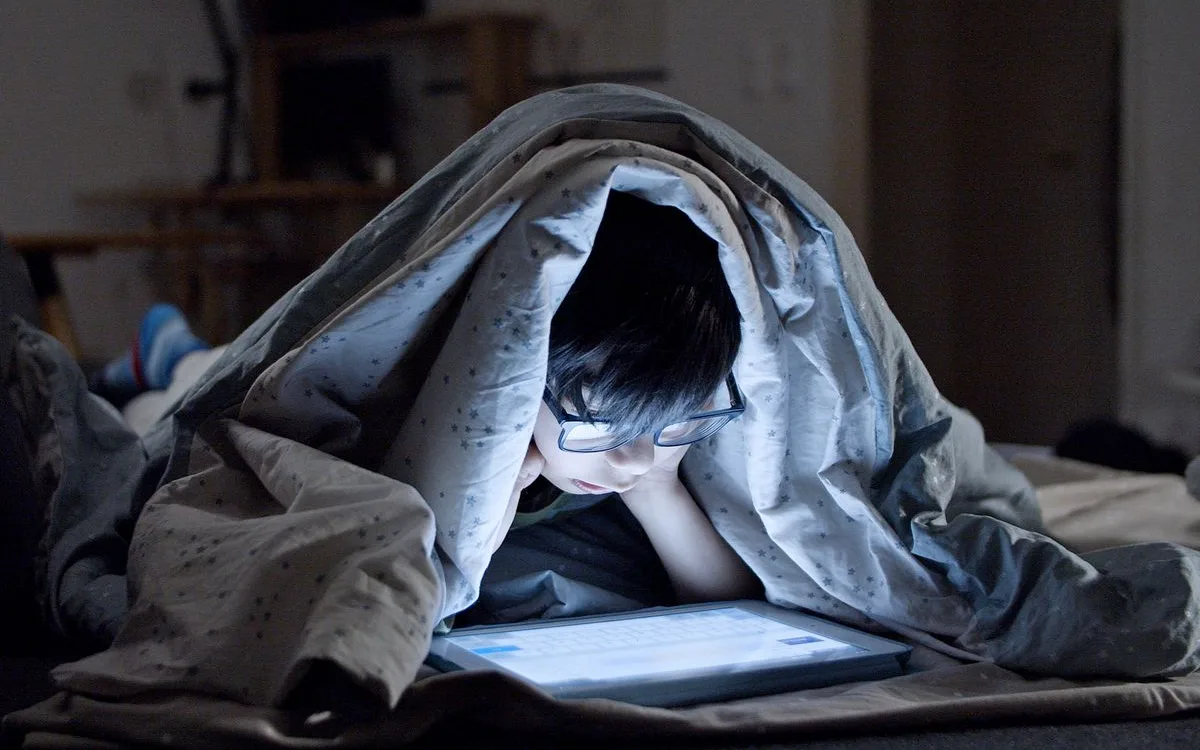
Time displacement. The most solid finding is also the plainest: a child who plays or scrolls until 10 pm sleeps less than one who stops at 8.30. The phone is not harming sleep by magic; it is taking the hour you wanted for it.
Arousal. Exciting games, fast video and chat keep the brain switched on. A calm audiobook and a thrilling shooter are both "screens", but they do different things to the hour before sleep.
Interruptions. A phone in the bedroom delivers notifications, and even a vibration can wake a light sleeper. Children rarely mention this because they do not remember the awakening.
What about blue light? You will hear that blue light from screens blocks the sleep hormone melatonin. The evidence for that is weaker than the headlines suggest, and the effect for normal evening use is small compared with the three points above. Night modes do no harm, but they are not a replacement for turning the screen off. Pediatric guidance (for example the American Academy of Pediatrics) is simpler than the light debate: stop screens about an hour before bed and keep devices out of the bedroom overnight.
Not in the bedroom. A charging spot in the kitchen or hallway, where every phone including yours spends the night, is the most effective single step most families can take. It works because it is a house habit, not a punishment aimed at one person. If your child uses the phone as an alarm, give them an alarm clock.
If a rule is hard to keep, it is often because the phone is too close. The same child who cannot resist at arm's length will usually do fine when it is on the other side of the flat.
Keep it short, repeatable and pleasant. A routine of 30 to 45 minutes might look like this:
The routine matters more than the exact times, because the body learns the pattern. A child who gets the same ten minutes with you every evening has a reason to put the phone down that is not "or else".
Some drift is fine. A bedtime an hour later on Friday and Saturday does little harm if the wake-up time stays roughly steady. The trouble starts when weekend bedtimes slide by three hours and Monday's wake-up arrives with a jolt. A simple rule works well: the weekend may be an hour later, not a different day. For longer breaks, see screen time in the school holidays.
Negotiate. Teenagers need slightly less sleep per night than younger children but need it just as badly, and they push against a rule that is imposed. Put the target on the table ("8 to 10 hours, and you get up at 7"), ask them to propose a bedtime, and settle somewhere in between. Offer the later bedtime as something to earn by keeping the current one for a month. A teenager who sets the time themselves tends to keep it, and the phone's night spot becomes a shared habit rather than a battle.
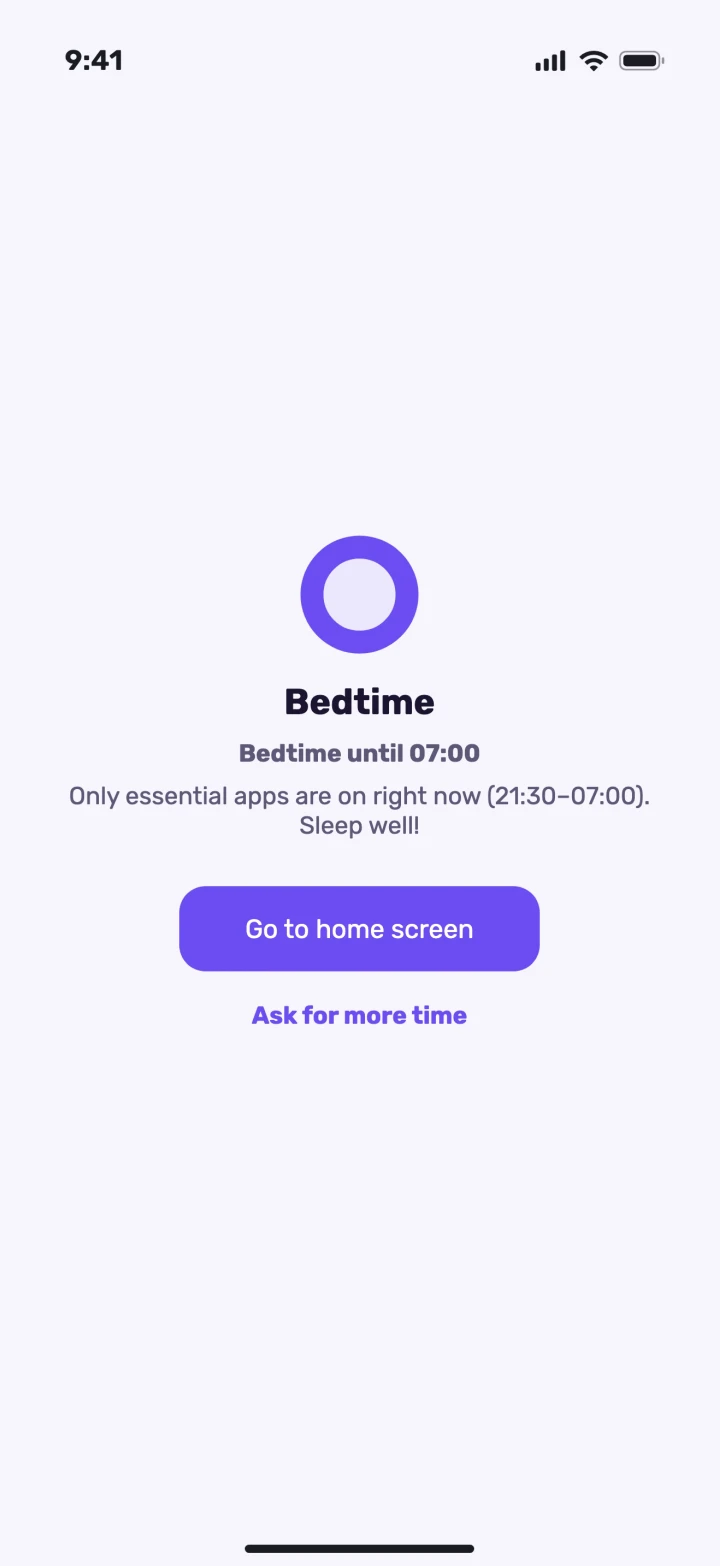
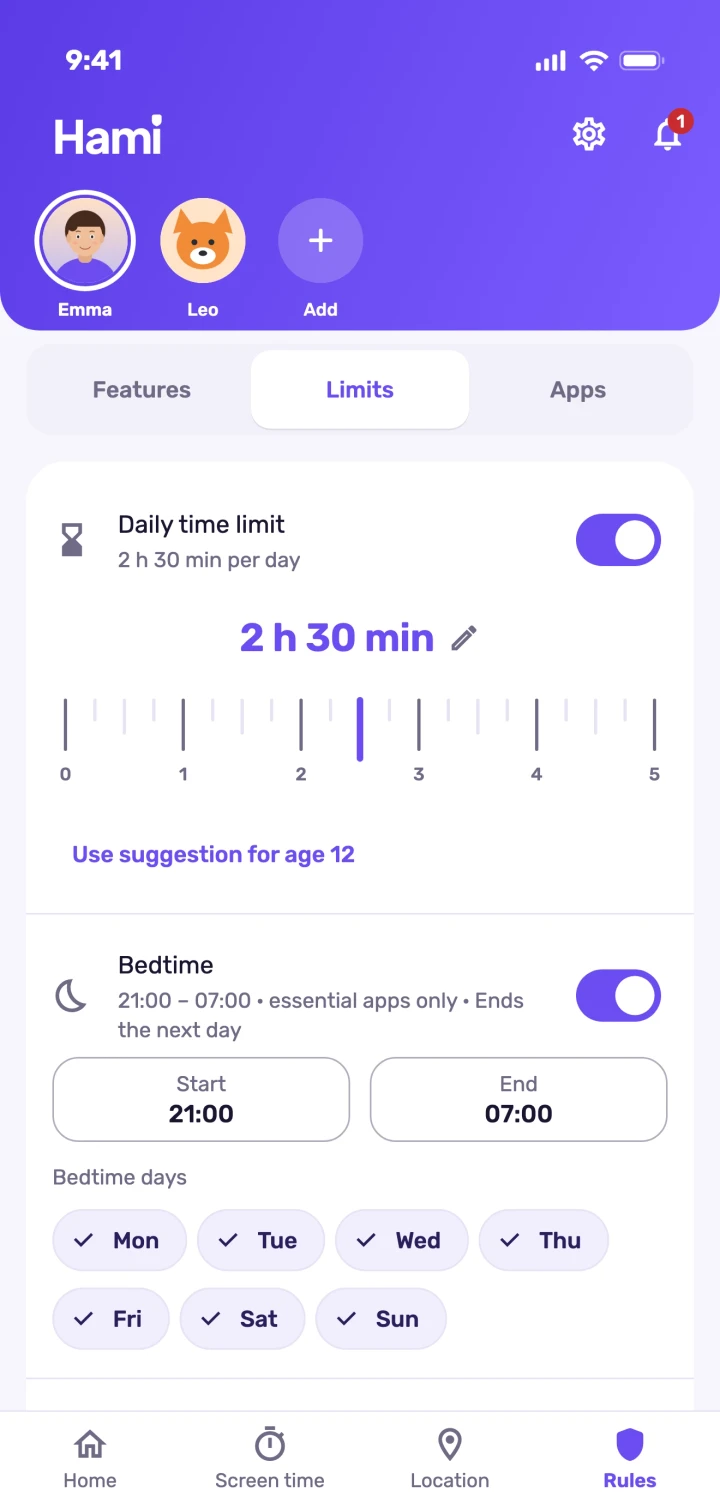
Hami has a bedtime rule: you choose when the phone goes quiet at night and when it opens in the morning, which apps stay available (for most families the phone call app and perhaps music) and which nights the rule applies to. The child sees the rule in Hami Kids and the lock screen says why the phone went quiet; nothing is hidden. Hami suggests a starting time based on the child's age, which you can change.
The rule closes apps but does not move the phone out of the bedroom, so combine it with the charging spot. Details and platform notes are in bedtime and school time on a child's phone. On an iPhone the lock screen can show an earlier reason until the app is reopened; what is locked is always correct.
Pick the charging spot tonight and tell your child that every phone in the house sleeps there, yours first. Agree the time the screen stops, write down a three-step wind-down and look at the mornings after a week.
The American Academy of Sleep Medicine consensus recommends 9 to 12 hours for ages 6 to 12 and 8 to 10 hours for ages 13 to 18, and the WHO recommends 10 to 13 hours for ages 3 to 4. Needs vary between children; the guide is a range, not a target.
The research on the light itself is mixed and often overstated. The clearer problems are time displacement (the phone eats the hours before sleep), arousal from exciting content and games, and notifications that wake the child. Those are fixed by rules about timing and place.
For most families this is the single most effective step. Pediatric guidance advises keeping devices out of the bedroom overnight, and a shared charging spot in the kitchen makes it a house habit rather than a punishment.
Buy an alarm clock. It is cheap and ends that argument. Negotiate the wind-down time with a teenager instead of imposing it.
Bedtime & school
Hami Team6 min read

Screen time
Hami Team8 min read

Screen time
Hami Team7 min read
Set it up in about five minutes. Your child can always see which rules are on.